Feeds:
Posts
Comments

Archive for the ‘dissertation advisors’ Category

Time management matrix as described in Merrill...

Time management matrix as described in Merrill and Covey 1994 book "First Things First," showing "quadrant two" items that are important but not urgent and so require greater attention for effective time management (Photo credit: Wikipedia)

Not too long ago, when my adult son mentioned how busy his work and life have become,  my husband was reminded of an annual planning session he had attended at which a facilitator presented a workshop on how to organize your time. 

As my husband drew a diagram from that workshop, I realized that he was drawing time management guru Stephen Covey‘s famous matrix. 


Stephen Covey’s Matrix 

Stephen Covey groups the ways we spend our time into four quadrants:

 –1-important and urgent

–2-important and not urgent

–3-not important and urgent

–4-not important and not urgent

As my husband drew the diagram, he said, “The facilitator said you should attend immediately and with personal involvement to Quadrant I matters.” The facilitator’s words about urgent matters resonated with my husband because he always has more work than he can get done.  Everything is urgent.


Everything is urgent

In your life, as an academic, ABD, dissertator, professional writer—does that sound familiar? You’re grading papers, attending meetings, preparing classes or presentations, returning email, managing crises at home, and trying to keep up with all that keeps hitting you. As you rush frantically and lose sleep, you also try to engage in last-minute binge writing of your dissertation before the time you told your advisor you would be submitting your promised work.  

Not only had my husband remembered clearly what the facilitator said is assigned to Quadrant I– the urgent and important matters, but he also clearly remembered those matters in Quadrant IV.  The facilitator said that Quadrant IV contains matters that you could basically forget about or things headed for the “circular file.” In other contexts, Quadrant IV could include behaviors such as vegging out in front of the TV or hanging out at Facebook.

So that’s Quadrant I and IV.  What about Quadrant II?  Important but NOT urgent matters would go in Quadrant II. 

Not surprisingly, my husband said that had forgotten what the facilitator said specifically about Quadrants II.  That’s probably because my husband, like so many of us, has to focus on urgent matters. The stuff that never stops. 


What you need to meet your goals

What are the important matters contained in Quadrant II and why should we care?  Take a look at what matters are in Quadrant II:

–goal-setting

–planning

–building relationships

–exercising

–productivity

People who most often meet their goals do more planning, organizing, and anticipating. They work efficiently and productively, avoiding last-minute sprints in order to meet impending deadlines, and they honor goals of a healthy lifestyle and close relationships.

While you might be able to avoid some of the distractions and time-wasters of Quadrants III and IV, how do you ignore the unrelenting onslaught of urgent demands of Quadrant I so that you can spend more time with the important matters of Quadrant II?  


Controlling what’s urgent

Not everything is an emergency, and we can take steps to stay out-of-the-way of things that appear urgent. Whenever possible, avoid email, particularly before or during a writing session. Avoid such additions to your workload as more volunteering, carpooling, office projects when the work really isn’t your responsibility, and perfectionism that can lead to unwarranted revision and research on your writing project.

Let people know that you are turning off your email and phone during the time you are writing. That would be a bold, but empowering step, wouldn’t it?


10 tips that will move you closer to your writing goal

Here are more tips that will help you increase your focus on what is important and also help you move closer to your writing goal:

–Anticipate future demands and activities. Plan, plan, plan. 

–Make your schedule and stick to it.

–Plan do-able, timely deadlines which you meet.  Such a plan results in productivity.

–Prepare so that when you sit down to write, your subconscious has had time to work on the ideas.

–Include physical exercise in your life. (Check out previous blogs and upcoming blogs on the importance of exercise to your writing life.)

–Break out the outlines. If you don’t have an outline, make one. Have an outline in place to guide your writing session.

–Routinely, daily, go to a quiet place to write and to plan the next day’s writing.

–Set up an accountability factor. Ask your friends if you can mail them a chapter and then tell them when you will mail it.

–Email your coach with frequent updates on daily writing sessions.

–Keep an eye on productivity—it’s under your control.

It might be a small problem for you to push aside something seemingly urgent in order to plan and schedule writing sessions, but if you don’t do that, you’ll have the big problem of not producing text because you are running around as if your hair is on fire.

Your hair isn’t on fire.  Slow down, plan, and show up to write.

In the March issue of my newsletter Smart Tips for Writers, I wrote about Stephen Covey’s “Big Rocks” and how that strategy relates to your dissertation. Let me know if that issue never arrived in your inbox. If you aren’t signed up for my newsletter, you can take care of that at my website at www.nancywhichard.com.

I’d love to hear your ideas on urgent vs. important matters and how they impact your writing.

Best to you,

Nancy

Nancy Whichard, Ph.D., PCC
Your International Dissertation Coach and Academic Career Coach
www.smarttipsforwriters.com
www.dissertationbootcamp.net
www.nancywhichard.com
nancy @ nancywhichard.com

Read Full Post »

A young patriot salutes heroes at the 2009 Nat...

Image via Wikipedia

I have coached many people who write dissertations while juggling the demands of family life. It’s difficult to juggle the daily demands, but to give up a holiday with one’s family is a particularly hard choice to make.

As the Memorial Day holiday approaches here in the U.S., I am thinking back to a Memorial Day weekend years ago when I had to choose my dissertation over the holiday weekend with my family. Now it seems as if it was a small sacrifice, and completing a dissertation definitely requires some sacrifices. But at the time, I felt that the dissertation process had demanded too much from me one too many times.

In my Washington, DC suburb, Memorial Day has always been a day for ritual and fun. The day begins with a 3K Fun Run. The day proceeds with a fair and a parade and back-yard picnics. Except for the one year when I had to spend the whole weekend once again revising the intro to my diss.

My defense was approaching. I thought I was on track since the full draft of the dissertation had been revised many times and had finally been approved. Only the intro needed one more rewrite, and I had done that, following the straightforward suggestions for revising from my advisor. I then sent the rewritten Intro off to him. 

Just before Memorial Day, he returned the revision to me with a note saying that I should take out all of the newly added pages and re-work the whole chapter.

I was dumbfounded.  I knew better, but because the deadline was so close I wrote to him, saying that I had done what he had told me to do. His only comment was that he didn’t want to be told what he had said.

I hoped that I hadn’t alienated him. And I knew that I had to grind out the new rewrite immediately. I gave up my holiday weekend with my family and sat in front of my computer for the holiday. 

As I look back on that weekend now, years later, I have changed my perspective on several counts.

I remember now that when I was revising the Intro, my advisor’s suggestions struck me as a bit off the mark. But I didn’t raise any questions or concerns with him. Of course, the advisor is always right, but it would have been smart to at least give voice to my concerns.

It strikes me now that perhaps I was even a bit lazy in adopting his comments without discussing my concerns with him or without thinking of an alternative approach.

As for that Memorial Day weekend, I don’t think that my kids felt neglected. I did miss out on some fun, but I bounced back. It wasn’t the end of the world. And I think my kids learned something about how much work it takes to finish big projects.

What I had to do was draw on my resolve and my mental toughness to get through this challenge.

Over the long period of time that I worked on the whole dissertation, I learned the value of building perseverance, resilience, and courage. Actually, learning to rely on those strengths may be the life-changing and lasting benefit for me of writing the dissertation. 

If you, too, are finding yourself drawing on and building your mental toughness and resolve as you write your dissertation, I salute you. Only in such a long-term, large project do you find such an opportunity.

Warm regards,

Nancy
Nancy Whichard, PhD, PCC
Your International Dissertation Coach
www.nancywhichard.com
nancy@nancywhichard.com

Read Full Post »

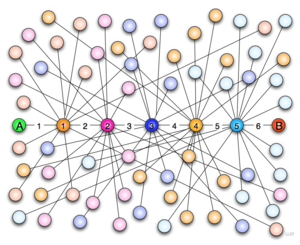
Six degrees of separation: Artistic visualization.

Image via Wikipedia


“I’ve had very little, if any, support from my advisor or my committee,” and so began another coaching call this morning with the writer of a dissertation. 

Many dissertation coaching clients say that their advisors are hands-off, giving little or no substantive feedback, or not wanting to see a dissertation at all until it’s complete. 

Does this sound familiar?  Do you feel you’ve depleted your resources, and you need some content-specific help? 

What to do? Here are some ideas from some of my coaching colleagues and also from some of my clients. 

1.  You shouldn’t have to look outside your program for content-specific help.  If you have a coach, one of your coaching goals could be improving communication with your advisor (or someone else on your committee) who has the relevant background knowledge. Work with your coach to plan your strategy. 

2. If you can think of someone who might know someone who can get you closer to a source, you will eventually succeed.  Think about Stanley Milgram‘s Small World experiment (which inspired the Six Degrees of Separation book and movie.) 

3. Post a question on Linked-In or make up your own study group. 

4.  Engage a willing friend, colleague, or coach to read some of your text and ask you questions about what’s going on.  Tell your reader to be curious.  You want a naïve reader, not a critical expert. The right questions can help you move toward a breakthrough. 

5.  Take a class!  
As a client phrased it, “Make your own Woody Allen moment—here comes the director onto the stage.”  Figure out who could be your Woody Allen. Who is the person you most want to learn from? Then sign up for a class from that person, and write the paper for the class.  

If your project has stalled and your advisor offers minimal to no support, you need a strategy. Think Small World.  Or make your own Woody Allen moment.  

Above all, prepare for a breakthrough. 

Read Full Post »

The Warmth in Diamonds 3a

If you’re writing a dissertation, what words would make you the happiest to hear?

Ben Shott, in Schott’s  Vocab asks  his New York Times readers what are the happiest words in the English language.  He  suggests something like  “I Do” or “The doctor can see you immediately.” 

That led me to wonder what are the happiest words for a dissertation writer.

 How about:

 –Brilliant!

 –Let’s just skip the last two chapters.  You’ve written enough.

 –Great Dissertation.  We’d like to offer you a tenure track position.

 –No revisions are necessary.

 What words would you like to hear?

Nancy

Nancy Whichard, Ph.D., PCC
Your International Dissertation and Academic Career Coach
nancy@nancywhichard.com
www.dissertationbootcamp.net/
www.usingyourstrengths.com/

Read Full Post »

Have you heard of a “showrunner”?

Writers in the TV industry are now expected also to manage—or to have the skills and strengths that would allow them to manage. 

According to John Wells, Writers Guild of America West president and writer/producer of E.R., Third Watch, and West Wing, it is virtually impossible to be just a writer anymore in television.

Instead of “head writer,” the path for the writer is to control the material and make decisions, thus be a  “showrunner.”

What are your responsibilities?  Writing a dissertation?  Yep, and a whole lot more. You can multi-task, right?  It’s time to think about how you are managing your career, and managing your career starts with managing the dissertation.  How will you close the project?

To deliver the dissertation:

1. Use the process and mindset of a showrunner/ Project Manager.
2. Exercise the strengths and skills of a showrunner/ Project Manager.

What strengths do you think an effective showrunner/ Project  Manager has?

Consider these:

1.  Leadership
2.  Judgment and critical thinking
3.  Self-control/self-discipline
4.  Diligence and perseverance
5.  Creativity and ingenuity

What happens if you look at  your dissertation project through the lens of leadership? 

A showrunner/Project Manager has the job of  providing leadership in these areas:

1.  Planning
2.  Scheduling
3.  Organizing and holding to a timeline
4.  Collaborating with team members
5.  Working with superiors/bosses
6.  Managing a budget
7.  Closing the project

How can you encourage and motivate yourself to get things done?  How can you organize tasks to make following through more of a given?

Along with writing content, make sure you are managing your project:

– Closing the project depends on planning, scheduling, and organizing.

–Exercise your strength of working with others.  Don’t hide out to avoid all personal contact with advisors or others who can help you in the process.

– Consider the costs.

You may not be managing a $26-million-dollar TV budget, but consider what it costs you not to make and meet a schedule. 

Writing a dissertation is a great time to practice the strength of leadership.  How are you running your show?

I’d love to hear from you

All good wishes,

 Nancy

Nancy Whichard, Ph.D., PCC
Your International Dissertation and Academic Career Coach
nancy@nancywhichard.com
www.dissertationbootcamp.net
www.usingyourstrengths.com
www.smarttipsforwriters.com

Read Full Post »

You’ve made a big deadline?  Hurray for you!

If you’ve sent off a revised draft of a chapter or major chunk of your dissertation to your advisor or you’ve finished multiple revisions of an article and sent it off to a journal, pat yourself on the back, think about what comes next….

And then take some time off.  It could be two days or a week, but give yourself time to regenerate and restore your depleted resources.

Go swimming.  Read a novel.  Spend time with a friend or your partner.

Afraid that you will hide out when it’s time to get back into action?  Then put a few things in place to help you get back o.k.

Here are four tips to help you make an easier reentry:

1. Mark your calendars for the day and the time you will be back at work. Make the start time as important as a departure time would be for you if you had a flight scheduled that day. Plan to do your laundry or check your email much earlier or much, much later, but not at the time you are restarting your writing.

2. Clarify the first steps.  Determine some specifics on what to do that first day back at work. Why bother to set a date to start, if you sabotage yourself by having no plan? 
 
3. Learn from the past.  If you are a bit monkey-brained as you think about planning your first steps after you return, free-write now for five minutes about what you have learned from the work you’ve just completed, learning that you will put into play for the next section or chapter or writing project.

4. Put your plans where you can’t miss them.  Situate the plans to be the first things you see when you turn on your computer or print them out so they’re physically in the middle of your clean desk.
 
You deserve a guilt-free break.  Mark your calendars and publicize the day and time you’ll be back at work. Put your plans for your first steps after you return in plain sight. A small price for a guilt-free break!

I would love to hear how you make a break part of your writing process.

Until next time,

Nancy 

Nancy Whichard, Ph.D., PCC
Your International Dissertation and Academic Career Coach
nancy@nancywhichard.com

www.dissertationbootcamp.net
www.usingyourstrengths.com
www.smarttipsforwriters.com

Read Full Post »

If your goal is to finish your dissertation during this new year of 2010, be bold, be optimistic, and persevere.

Positive psychologists for several years have said that the strengths most important for happiness are curiosity, optimism, gratitude, zest, and loving and being loved.

My experience as a dissertation and writing coach tells me that perseverance is a predictor of successful writing. Even if interest in a topic wanes or times get hard, perseverance, mental toughness, or grit keeps the writer writing. 

Frequently ABD’s resist a self-assessment that suggests they have perseverance as a strength.  But there are ways to build perseverance.

Leveraging the strengths of boldness and optimism can help ABD’s acknowledge or access their strength of perseverance.

If ABD’s or other writers recognize situations where they have been bold in the past and identify current opportunities for boldness, they can also generate optimism.  With boldness and optimism, ABD’s can refute the self-sabotaging belief that they lack the necessary perseverance to finish the dissertation process.  

Adding boldness and optimism to perseverance is a wining combination.  These strengths hold the answer to the question: What do I need in order to be a successful writer?

Where can you be audacious and bold? 

• Start with your writing goals – both long-term for 2010 and short-term for this week and this month.  Commit to a reasonable goal for the next two weeks.
• Draw boundaries to protect your writing time.
• Revitalize your relationship with your advisor.
• Invest in a dissertation coach.

Where will you move out of your comfort zone for the sake of your writing?

All good wishes for a very productive and happy 2010,

Nancy

Your International Dissertation Coach and Academic Career Coach
nancy@nancywhichard.com
www.nancywhichard.com
www.dissertationbootcamp.net
www.usingyourstrengths.com

Read Full Post »

“ABD” is not a credential.  It isn’t a degree.  All things considered, finishing your dissertation is probably the smart thing to do.

It can help you get a job or keep the one you have.  Even if you aren’t going into the academic job market, for now, you may be surprised what a PhD can do for you on down the road somewhere.

Furthermore, sticking with your dissertation may give you the chance to learn something –quite a bit of something – that you didn’t know before.  It’s easy to disregard the dissertation process as a time for learning since the emphasis is on finishing and moving on.  

During the dissertation process, you may be fortunate enough to learn:
•  How to take care of yourself physically and emotionally so that you don’t sabotage your success
• How to understand fully that you have every right to the success you’re achieving
• How to take risks and to be bold in the writing process even though you’re scared
• How to recognize when you need help and to ask for it
• How to be clear-headed and reasonable even if your advisor is not clear-headed or reasonable
• How to write during whatever time, big or small, that you have
• How to find your way and to keep moving toward a big, difficult goal
• How to feel grateful for
       –the progress you are able to make
       –the opportunity to earn a PhD
       –an advisor who does his/her best to help you

All good wishes,

Nancy

Nancy Whichard, Ph.D., PCC
Your International Dissertation and Academic Career Coach
nancy@nancywhichard.com
www.nancywhichard.com
www.usingyourstrengths.com
www.dissertationbootcamp.net

Read Full Post »

How often have you felt close to giving up completely on your dissertation?

I hear that statement most frequently among my dissertation coaching clients who are practically within a stone’s throw of finishing.

What could make it so hard to keep going? 

The outsider might think that during the long process of writing a dissertation, writers would have grown to self-confidently view themselves as experts.

The fact of the matter is that dissertation writers all too often aren’t encouraged to recognize or trust their expertise. The process is often riddled with self-doubt and uncertainty. 

Even in the best of circumstances, writing a dissertation may be one of the hardest tasks you’ll ever take on.  It’s made worse when an advisor offers little or no guidance or support. The worst stories I’ve heard range from advisors who are completely disengaged and  want nothing to do with the ABD student to advisors who seem not only to lack empathy  but also lack awareness of the effect of their sarcasm and volatile moods.

Since most ABD’s work with the same advisor for months, if not years, what looks for all the world like psychological abuse can take a toll on even the most resilient and determined student.

When dissertation writers are confronted by self-doubt and the desire to quit, it’s time to step back from the process.

As a dissertation coach and an academic career coach, I encourage my clients to view their experiences through various lenses.  This may sound Pollyanna-ish, but you probably can’t change the process, so why not change the way you look at it?

For instance, what might a future employer—even if the employer is not in your field of expertise—infer about you, based on your having a PhD?

The knowledgeable future employer will understand that you know:
•  How to bring the best you have to offer to a project and keep yourself in the game over a long period of time
•  How to manage an extended project, specifically an extended writing project
•  How to be politically savvy

This is just a start– What else have learned during this arduous process? 

When you are honest with yourself, you must admit that you are learning a great deal about stamina and grit as you write this dissertation.  The character strengths you are honing are perhaps just as important as your accomplishments in your field of study. What have you learned that will stand you in good stead after you leave the state of the ABD?

I’d love to hear from you.

Best,

Nancy

Nancy Whichard, Ph.D., PCC
Your International Dissertation and Academic Career Coach
nancy@nancywhichard.com
www.nancywhichard.com
www.usingyourstrengths.com
www.dissertationbootcamp.net

Read Full Post »

Georgetown University Professor Deborah Tannen writes about the supportive relationship she has with her two sisters.

In the Sept. 6, 2009 Washington Post, Tannen says that she sends them her manuscripts for their comments and once a book is published, she waits eagerly, yet nervously, for their response.

After reading a draft and sending Deborah Tannen some comments, one of her sisters also followed up with an email saying, “Stop reading this, and go back to writing your book.  Love, Mim.”

Professor Tannen says that she has posted that email over her writing desk, and the words continue to support her and help keep her on task.
 
I’ve always missed having a sister, but I know there are many other ways to have that same kind of support.

A client told me recently how anxious she had been about sending a draft to her advisor, but the kind, encouraging words as well as the constructive comments that accompanied the draft when the advisor sent it back buoyed my client and gave her the will to jump back into her work.

My dissertation coaching convinces me of the support writers need.  Often, in coaching I ask my clients to talk through what they are going to write when they get off of the phone with me.  Rehearsing the writing clarifies my client’s ideas and also engages my clients, reminding them of why they wanted to write about this particular idea and reassuring them that they do know what they will do next.

Frequently, clients also give me something in return.  After asking questions that helped a client become enthusiastic and self-confident about the immediate task ahead, she said, “I’m so glad I work with you.” 

I may not have a sister who sends me emails that I can post on my coaching table, but I did write down that comment and I put it where I can see it every day.

A blog post entitled “Instant mood lifter:  thank someone for a job well done”  (June 24, 2009) by the very successful Escape from Cubicle Nation blogger Pamela Slim revealed that she was moved to tears by receiving kind, thoughtful praise via a tweet.  Just goes to show you, doesn’t it? 

She said, “Kindness is not a little thing.  It is not fluffy, unicorn and rainbow coachy stuff.  Kindness heals.”

Have you told anyone recently that you appreciate their help or sent someone hard at work on a big and stressful project a supportive email?  It’s a wonderful thing to do. 

Have a great week.

All good wishes,

Nancy

P.S. I appreciate your reading my blog.  It means a great deal to me.  And I always appreciate your comments.

P.S.S.  Smart Tips for Writers, my online newsletter, goes out this week.  Register today at my website:  www.nancywhichard.com.

Nancy Whichard, Ph.D., PCC
Your International Dissertation Coach and Academic Career Coach
nancy@nancywhichard.com
www.nancywhichard.com
www.dissertationbootcamp.net
www.smarttipsforwriters.com

Read Full Post »

Older Posts »

Follow

Get every new post delivered to your Inbox.

Join 106 other followers